
Monthly cell challenge November 2026: The Fragile Side of Blood Cells
A 78-year-old man went for his yearly check-up at his general physician. Lately, he had some trouble with tiredness and recurrent infections but had not thought much about it.
A blood count was ordered, and the result showed a significant deviation.
CBC results from cell counter:
| WBC | 17,6 | 10⁹/L |
| HGB | 122 | g/L |
| MCV | 92 | fL |
| PLT | 227 | 10⁹/L |
| Lymphocytes | 13,2 | 10⁹/L |
The cell counter flagged for Blast/Abnormal Lymphocytes.
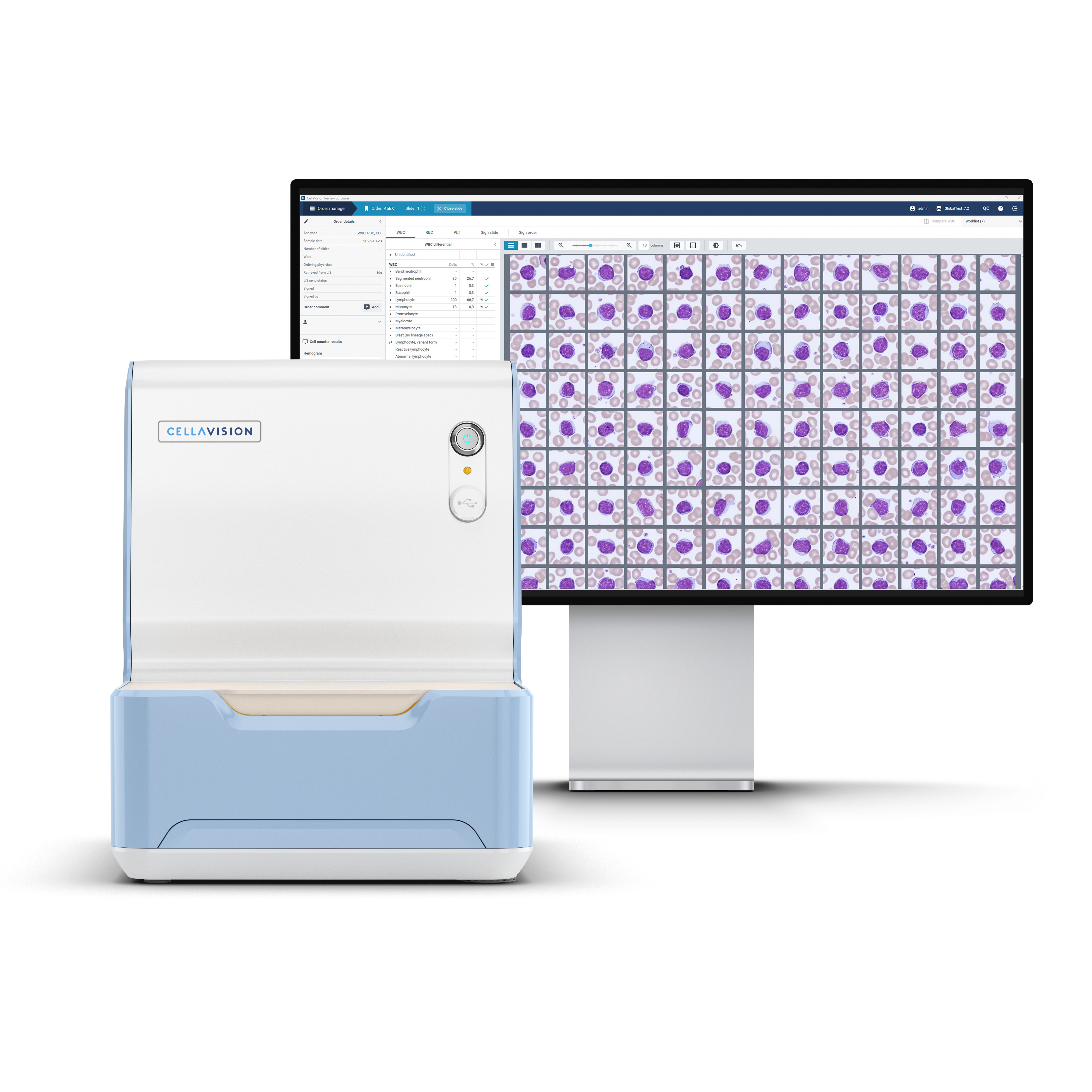
Due to the WBC count, a blood smear was made and stained with Wright –Giemsa stain and scanned on a CellaVision® DC-1 analyzer.
Smear review on CellaVision® DC-1
| WBC Differential | % | x109/L |
|---|---|---|
| Neutrophils | 26,7 | 4,70 |
| Lymphocytes | 66,7 | 11,75 |
| Monocytes | 6,0 | 1,06 |
| Eosinophils | 0,3 | 0,06 |
| Basophils | 0,3 | 0,06 |
| Findings | Object | Ratio |
| Smudge cells | 148 | 49,3% |
On the CellaVision® Remote Review Software, the MedTech observed a predominance of small to medium-sized lymphocytes with round to slightly irregular nuclei, clumped chromatin and scant to moderate amounts of slightly basophilic cytoplasm. Some variation in cell size and nuclear morphology was noted. Numerous smudge cells were also present.
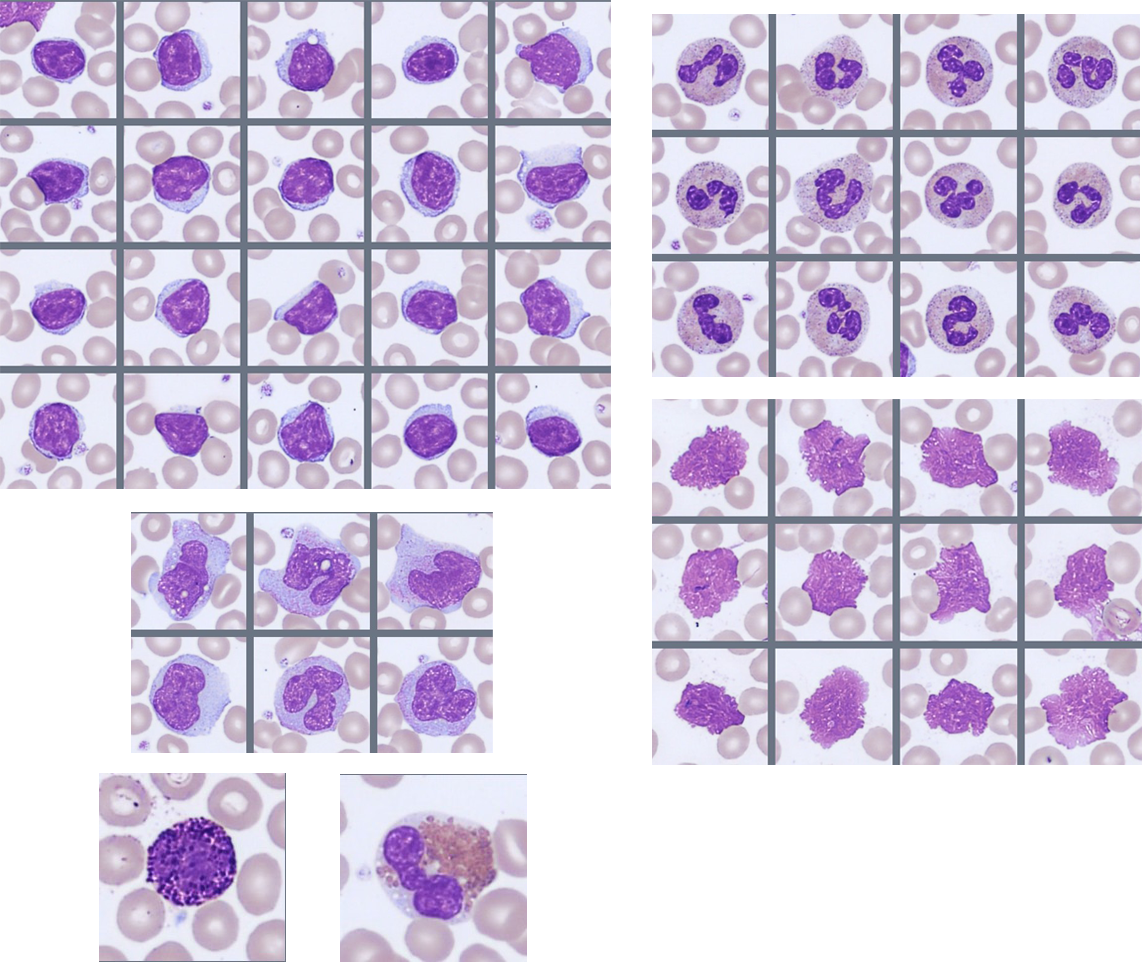
To further investigate the lymphocytosis, flow cytometry was performed.
Flow cytometry: CD5+, CD10−, CD19+, CD23+, CD25−, dim IgM+, CD38+.
Diagnosis:
Chronic lymphocytic leukemia (CLL)
Discussion:
Chronic lymphocytic leukemia (CLL) is characterized by the accumulation of mature, monoclonal B lymphocytes and is often discovered incidentally during a routine blood count [1].
The peripheral blood smear typically shows small, mature-appearing lymphocytes with clumped chromatin and scant, slightly basophilic cytoplasm [2].
Numerous smudge cells are another characteristic finding in CLL. They represent fragile lymphocytes that rupture during blood smear preparation, leaving behind disrupted nuclear material. Although commonly associated with CLL, smudge cells are not specific to the disease and may also be seen in other conditions [2][3].
In this case, the lymphocytosis and numerous smudge cells raised suspicion of CLL. The diagnosis was supported by flow cytometry, demonstrating a characteristic B-cell immunophenotype with co-expression of CD5, CD19 and CD23 [1].
Reference:
[1] Naresh KN, et al. Chronic lymphocytic leukaemia/small lymphocytic lymphoma. In: WHO Classification of Tumours. 5th ed. Vol. 11. Lyon: International Agency for Research on Cancer; 2024. p. 368–377.
[2] Bain BJ. Blood Cells: A Practical Guide. 5th ed. Chichester: Wiley-Blackwell; 2015. p. 461–464.
[3] Palmer L, Briggs C, McFadden S, Zini G, Burthem J, Rozenberg G, et al. ICSH recommendations for the standardization of nomenclature and grading of peripheral blood cell morphological features. Int J Lab Hematol. 2015;37(3):287–303. doi: 10.1111/ijlh.12327.