
CellaVision Global Test 2026:2 – Acute Promyelocytic Leukemia (APL)
Case Description
A 42-year-old man presented with a two-week history progressive weakness, fatigue and dizziness. He reported bleeding gums, tiny red spots on arms and legs and widespread bruising as well as tiredness and recurring fever and infections.
Laboratory Findings
Complete blood count (CBC):
|
Test |
Result |
Reference Interval (male) |
Unit |
|
WBC |
2.3 |
4.0 - 10.0 |
x109/L |
|
RBC |
3.35 |
4.5 – 5.9 |
x109/L |
|
HGB |
11.1 |
13.5 – 17.5 | g/dL |
|
HCT |
33.1 |
41 – 53 |
% |
| PLT | 6 | 150 – 400 | x109/L |
Cell Counter Differential:
|
Test |
Result (x109/L) |
Unit (%) |
|
Neutrophils |
0.10 |
16.2 |
|
Lymphocytes |
0.71 |
--- |
|
Monocytes |
1.40 |
--- |
|
Eosinophils |
0.00 |
0.5 |
| Basophils | 0.06 | 0.4 |
| IG | --- | 0.9 |
| NRBC | 0.08 | 0.0 |
WBC flags: Monocytosis, Blasts, Immature Gran, Atypical Lympho?
Analysis Details
Stain: May–Grünwald–Giemsa
Analyzer: CellaVision DC-1, CDMS 7.2, LED Microscope mode
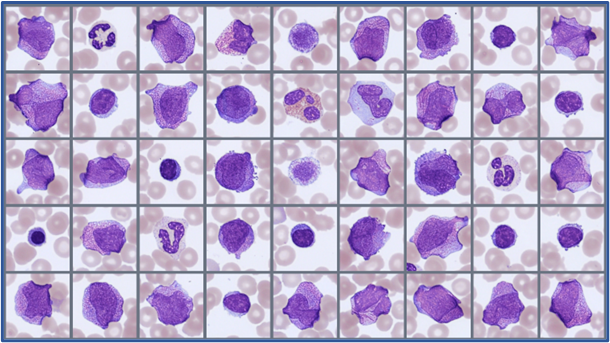
Sample of cells classified in the Global Test 2026:2
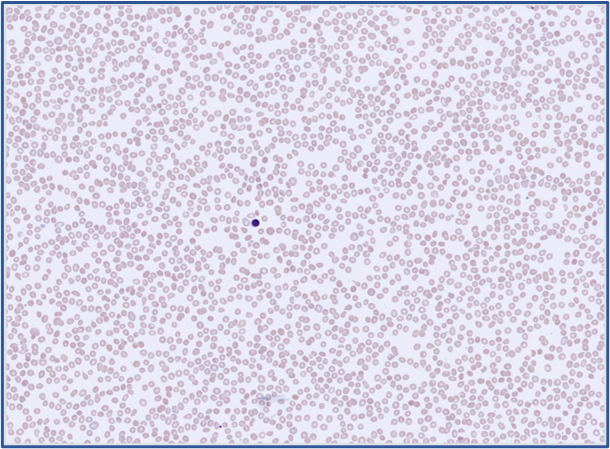
RBC Overview
Smear Interpretation
Peripheral blood smear examination reveals leukopenia with 56% blast cells. According to ICSH recommendations, abnormal promyelocytes were included in the blast count. These cells display abundant granular cytoplasm, irregular nuclear contours, and occasional Auer rods. Additional findings include severe thrombocytopenia, occasional giant platelets, left-shifted granulopoiesis, and circulating nucleated red blood cells.
Diagnosis
Acute Promyelocytic Leukemia (APL) is a distinct subtype of acute myeloid leukemia characterized by the accumulation of abnormal promyelocytes in the bone marrow and peripheral blood. The disease is often associated with cytopenias, bleeding manifestations, and the presence of abnormal promyelocytes with abundant granules and Auer rods.
Global Test 2026:2 Results Webinar
- Case presentation
- DC-1 Analysis - the WBC differential and RBC Characterization
- Differences in classification between examiner and participants
- Discussion about APL – From symptoms to laboratory diagnosis