
Monthly Cell Challenge #07 / 2026
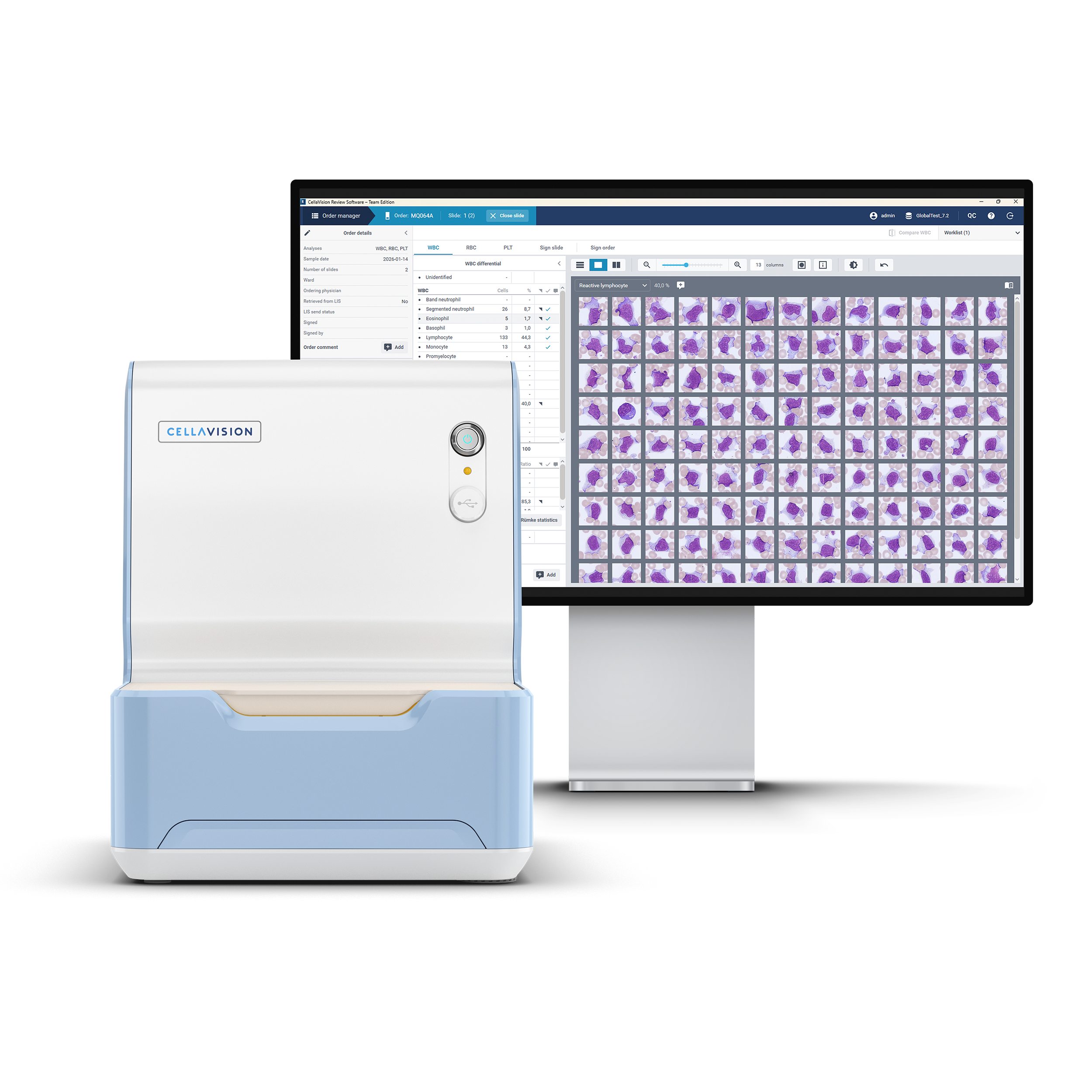
The Fatigued Student
A 19-year-old female university student visited her healthcare provider because of increasing fatigue over the past weeks. She also reported a sore throat, low-grade fever, and swollen glands in her neck. Recently, she had noticed that even light physical activity made her feel unusually tired.
On physical examination, enlarged cervical lymph nodes and mild splenomegaly were noted. No significant past medical history was reported.
CBC results:
| Test | Result | Units |
|---|---|---|
| WBC | 16.8 | x109/L |
| HGB | 12.4 | g/dL |
| MCV | 89 | fL |
| PLT | 138 | x109/L |
Smear review on CellaVision® DC-1 Remote review
| WBC Differential | % | x109/L |
|---|---|---|
| Neutrophils | 8.7 | 1,5 |
| Eosinophils | 1.7 | 0.3 |
| Basophils | 1.0 | 0.2 |
| Lymphocytes | 44.3 | 7.4 |
| Monocytes | 4.3 | 0.7 |
| Reactive Lymphocytes | 40.0 | 6.7 |
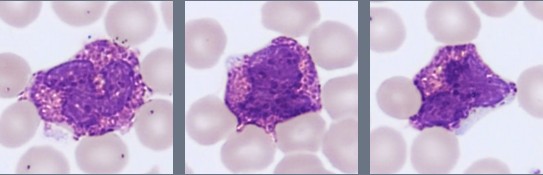
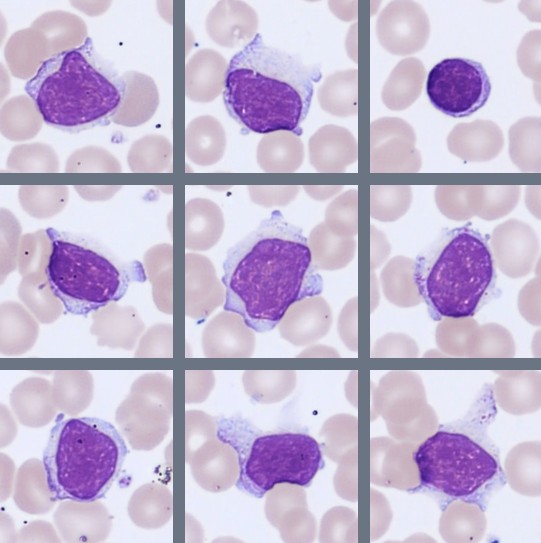
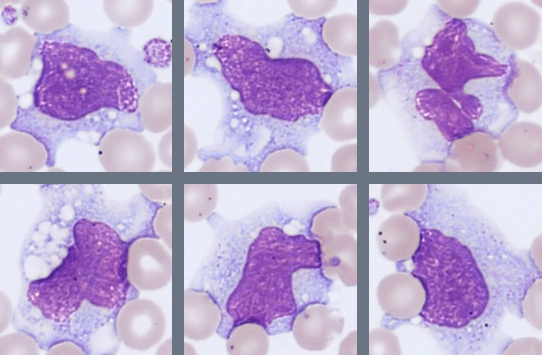
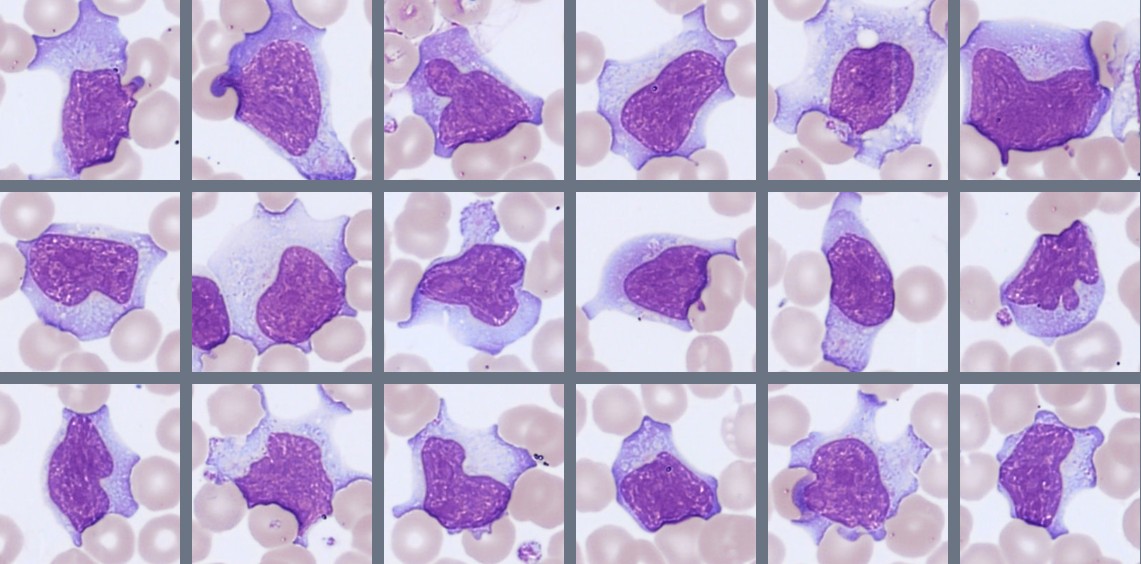
The peripheral blood smear demonstrated lymphocytosis with a heterogeneous lymphoid population. Numerous large lymphoid cells were present in addition to small mature lymphocytes.
The larger lymphoid cells showed abundant pale to deeply basophilic cytoplasm, frequently extending around adjacent erythrocytes. Nuclear morphology was variable, ranging from round to irregular or indented nuclei. Chromatin appeared moderately condensed, and occasional nucleoli could be seen. Marked variation in cell size and shape was observed throughout the lymphoid population.
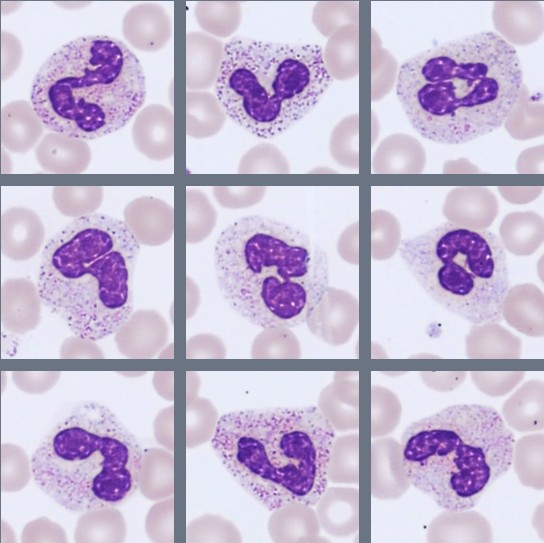
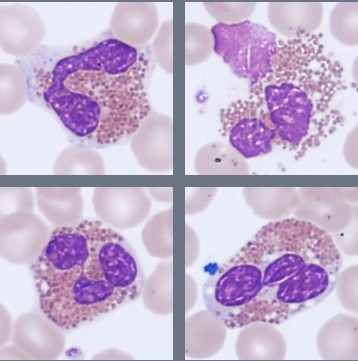
Granulocyte morphology appeared unremarkable, and red blood cell morphology was essentially normal.
Diagnosis:
Infectious Mononucleosis (Epstein–Barr Virus Infection)
Discussion:
Infectious mononucleosis is an acute viral infection most commonly caused by Epstein–Barr virus (EBV), which belongs to the Herpesviridae family [1,2]. It mainly affects adolescents and young adults. Common symptoms include fatigue, fever, sore throat, and enlarged cervical lymph nodes [1,2].
A typical blood finding is reactive lymphocytosis. The reactive lymphocytes are activated T cells responding to EBV-infected B cells. On the blood smear, these cells are usually larger than normal lymphocytes and have abundant basophilic cytoplasm, variable nuclear shapes, and moderately condensed chromatin. The cytoplasm may partly surround nearby red blood cells, which is a classic feature seen in infectious mononucleosis [3,4].
The diagnosis is based on the clinical picture together with laboratory testing. It can be confirmed by a heterophile antibody test, such as Monospot, and/or EBV-specific serology, including antibodies to viral capsid antigen (VCA) and Epstein–Barr nuclear antigen (EBNA) [1,2].
Treatment is usually supportive. This includes rest, hydration, and relief of symptoms such as fever and throat pain. Most patients recover within a few weeks. If splenomegaly is present, contact sports and strenuous physical activity should be avoided because of the risk of splenic rupture. Antiviral treatment is not routinely recommended, and corticosteroids are only used in selected severe cases [1,2].
This case highlights the value of peripheral blood smear review in recognizing reactive lymphocytes and distinguishing reactive lymphocytosis from hematologic malignancies. Careful morphological assessment remains an important part of the diagnostic workup and, together with the clinical presentation, it can provide strong clues to the diagnosis of infectious mononucleosis.
If you want to know more about Mononucleosis, watch the webinar from the CellaVision Global Test 2026:1 here.
References:
[1] Jameson JL, Fauci AS, Kasper DL, Hauser SL, Longo DL, Loscalzo J, editors. Harrison's Principles of Internal Medicine. 21st ed. New York: McGraw-Hill Education; 2022.
[2] Cohen JI. Epstein–Barr Virus Infection. N Engl J Med. 2000;343(7):481–492.
[3] Bain BJ. Blood Cells: A Practical Guide. 6th ed. Oxford: Wiley-Blackwell; 2020.
[4] Rodak BF, Fritsma GA, Keohane EM. Hematology: Clinical Principles and Applications. 6th ed. Elsevier; 2020.